If you’re working in B2B SaaS marketing today, you’ve likely seen that what worked just a couple of years ago isn’t getting the same results anymore.
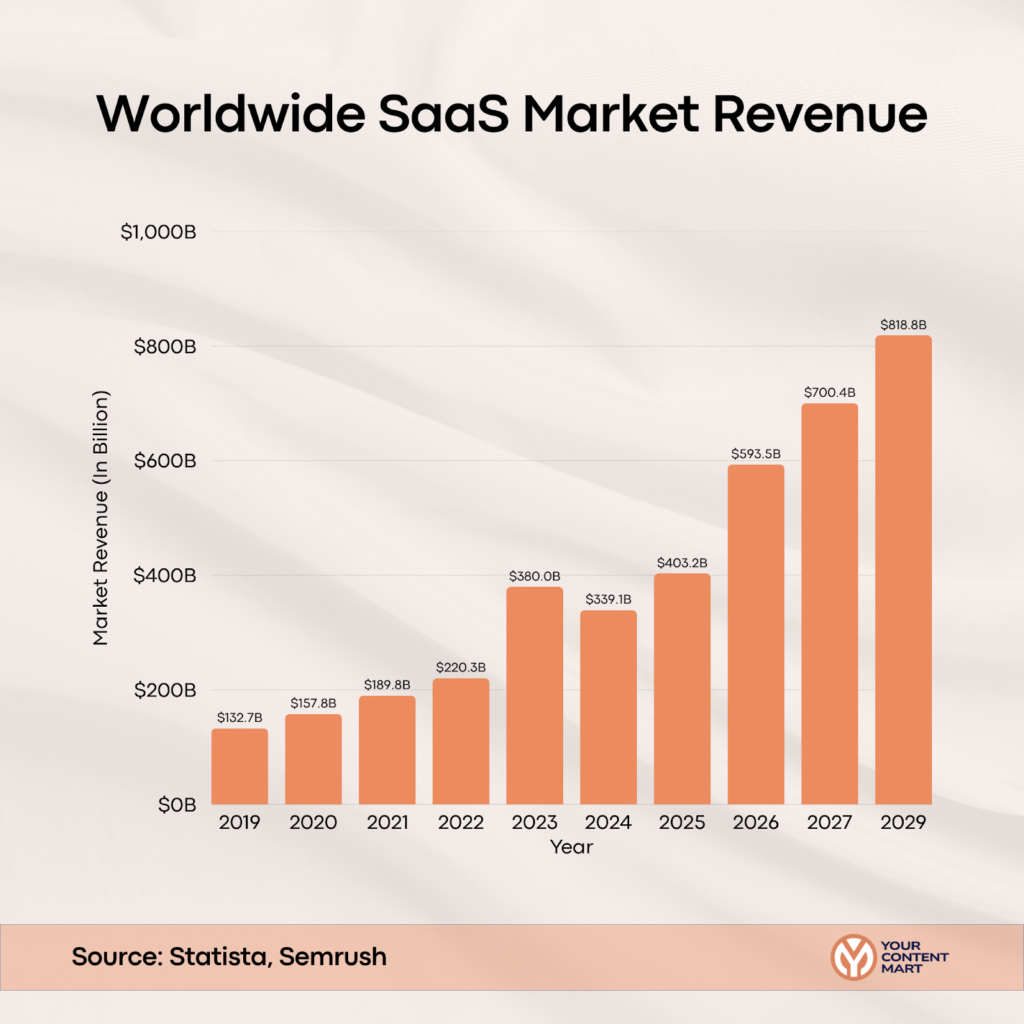
The global SaaS market is projected to generate nearly $819 billion by 2029, and AI software now serves nearly 3 billion customers worldwide, making it the largest SaaS industry by user base.
In 2026, B2B SaaS growth is driven more by disciplined execution and experimentation. Customer acquisition costs are increasing, buyer journeys are more fragmented, and AI is accelerating execution across marketing functions. The search landscape is also evolving rapidly.
Success now depends on focusing efforts on the most impactful areas and working with the right team of experts, rather than simply increasing activity.
I’ve looked at the latest research on content marketing, SEO, AI, and customer acquisition in B2B SaaS. There’s a clear pattern showing what’s working today.
Let’s go through the key B2B SaaS content marketing statistics and see what they mean for your marketing in 2026.
Need to talk to a SaaS SEO expert? Let’s book a call.
How We Collected this Data
This analysis is based on first-party research and large-scale datasets from Content Marketing Institute, Ahrefs, HubSpot, First Page Sage, DataLily, Semrush, and Statista. We focused on statistics that explain B2B SaaS market dynamics, acquisition channels, SEO performance, AI-driven search changes, and overall revenue and pipeline efficiency in 2026.
1. The Search Landscape is Being Fundamentally Rewritten
Before we dive into what works, let’s see what’s changing.
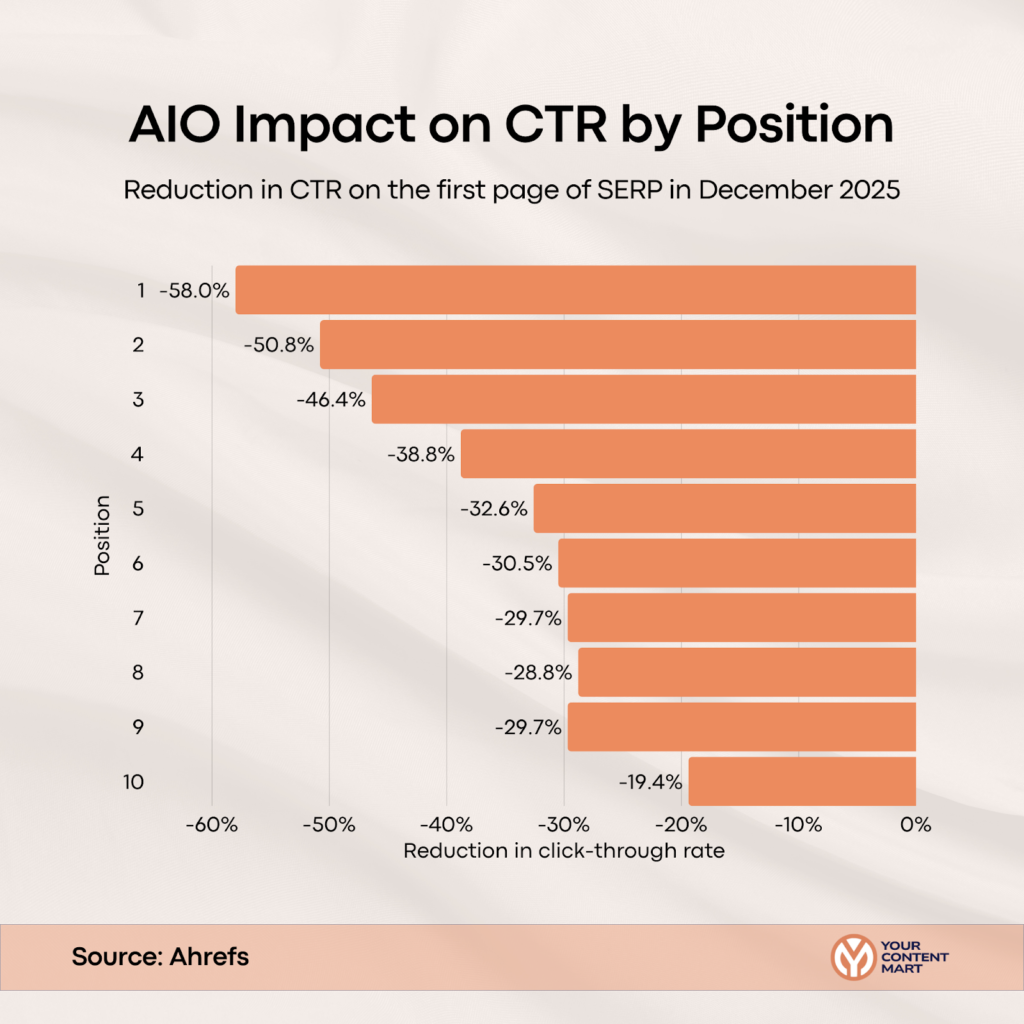
Google’s AI Overviews are materially suppressing organic click-through rates across the first page of search results. Position-one results are seeing a 58% drop in CTR when AI overviews appear. Even positions 8–9 are experiencing an average decline of 30%.
This isn’t just a small change. It’s a complete shift in how search traffic works.
And the disruption runs deeper. By January 2026, ChatGPT ranked among the most searched terms globally, surpassing 1 billion searches and joining queries like WhatsApp Web and YouTube at the top of global search demand. People aren’t just using AI tools; they’re actively seeking them out at unprecedented scale.
The data reinforces what many marketers are feeling firsthand. 61% of marketers believe that marketing is experiencing its biggest disruption in 20 years due to AI, which has fundamentally changed how businesses engage with customers.
This isn’t just business as usual with a few new tools. The whole way people find, research, and decide is being rebuilt.
So what does this mean for SEO and content marketing? It is that the basics matter now more than ever.
Key Takeaway
AI is fundamentally reshaping search behavior and reducing traditional organic click-through rates, with top positions losing over half their traffic when AI overviews appear. SEO can’t rely on rankings alone anymore. Optimize for AI visibility by structuring content clearly, answering specific questions concisely, and targeting featured snippets and AI summaries.
2. SEO Still Delivers the Most Cost-Efficient, Fastest-Payback Growth
Even with all the changes in search, getting customers through organic channels is still the cheapest way to grow a B2B SaaS company.
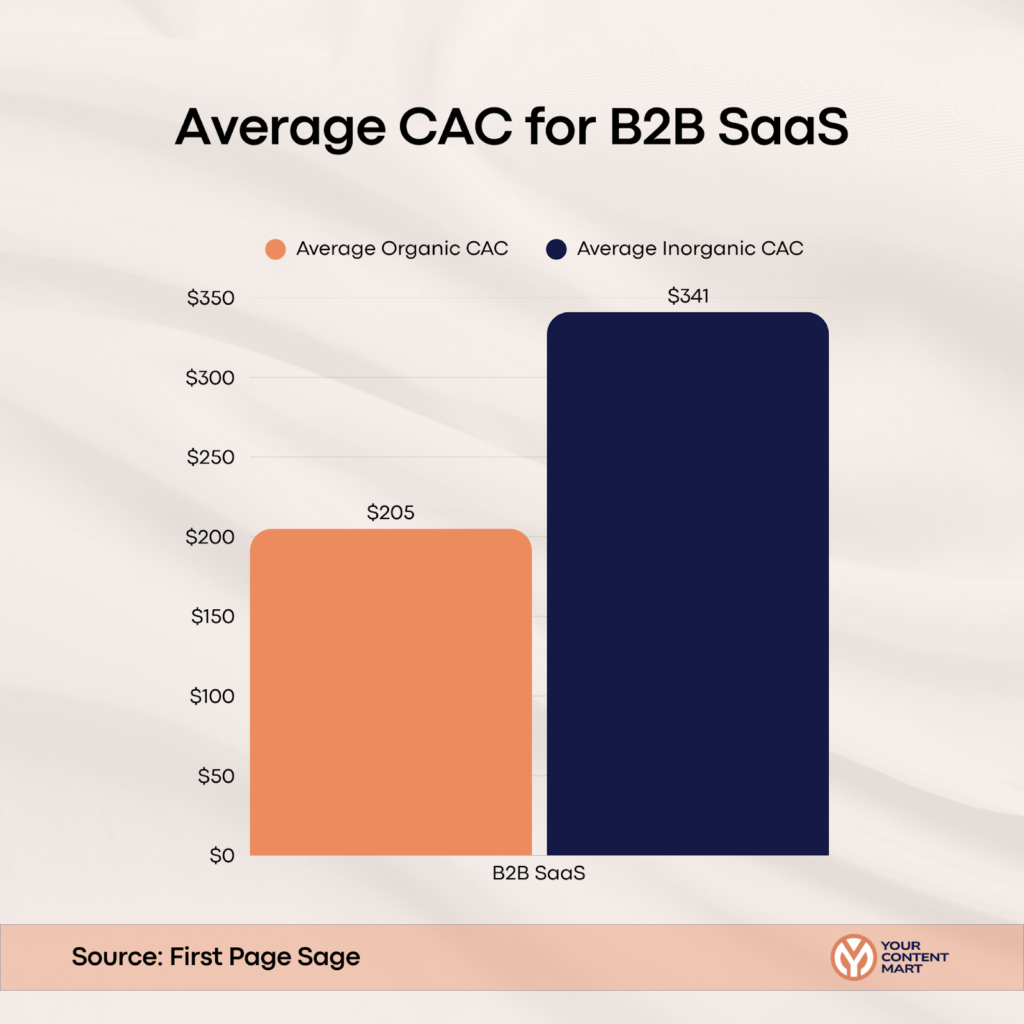
The average customer acquisition cost for organic channels is $205, compared with $341 for inorganic channels such as paid advertising.
That big gap is why so many SaaS leaders are moving their budgets to SEO, content, and product-led growth.
The advantage gets even bigger when you add free trials or freemium offers. Companies using these can cut their average CAC to levels better than most other B2B industries. Lower CAC means you can put more money into your product, customer support, and keeping customers happy, which pays off over time.
Key Takeaway
Despite AI-driven disruption, organic channels remain the most cost-effective way to grow a B2B SaaS company, with significantly lower customer acquisition costs than paid advertising. Double down on organic acquisition as a core growth lever. Invest consistently in SEO, educational content, and product-led entry points like free trials. Track CAC by channel and reallocate spend toward assets that compound over time rather than channels that reset when budgets pause.
3. Marketers are Choosing SEO Over Everything Else
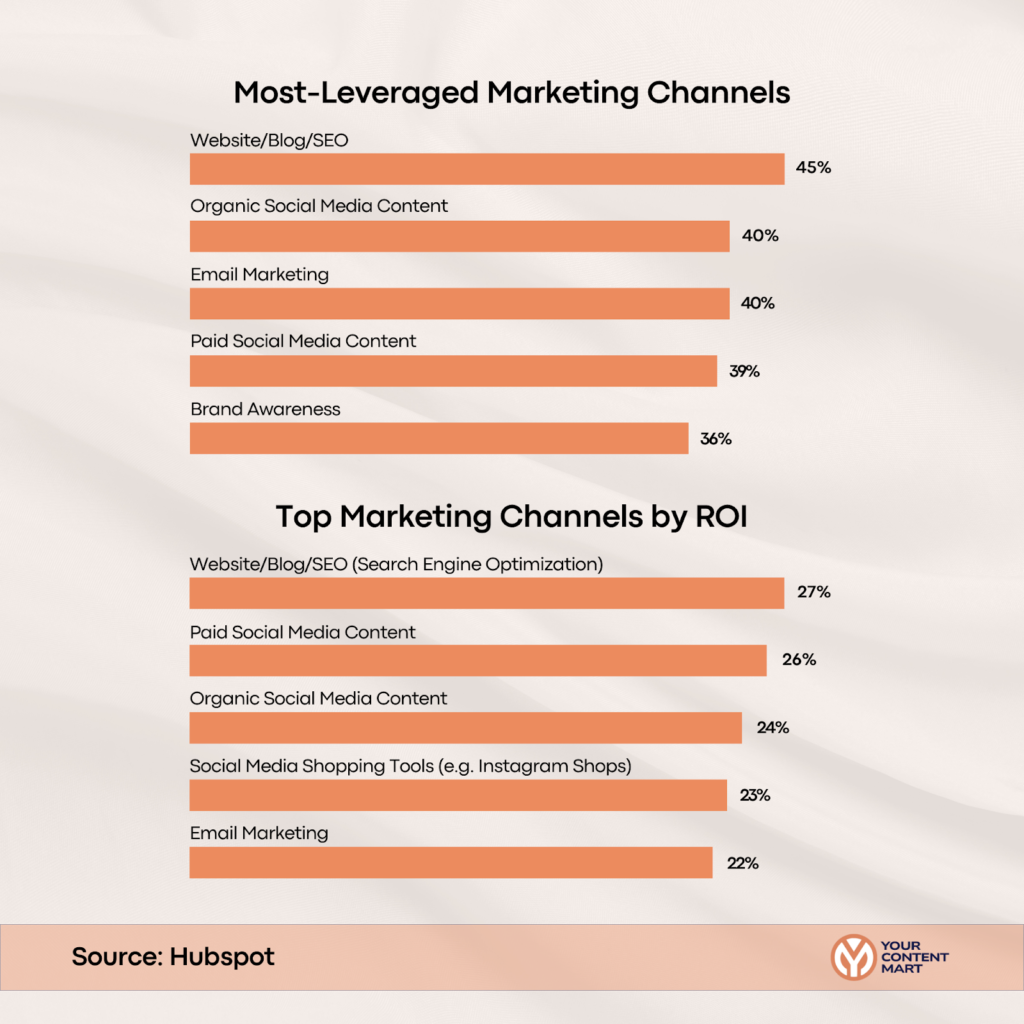
The preference for SEO isn’t just theoretical. 45% of marketers leverage websites, blogs, and SEO as their top marketing channels, with organic social media and email marketing following closely at 40%, and paid social media at 39%.
When asked about ROI specifically, the gap widens. Based on return on investment, 27% of marketers prefer SEO marketing due to its high ROI, making it the clear leader among all marketing channels.
This isn’t about novelty or experimentation. SEO is the default choice for teams that need predictable, efficient growth.
Key Takeaway
SEO isn’t just popular, it’s the most trusted growth channel. Nearly half of marketers prioritize websites, blogs, and SEO, and it leads all channels in ROI preference. Treat SEO as infrastructure, not a campaign. Build topic clusters, strengthen internal linking, and prioritize commercial-intent keywords.
If you want to make organic search your primary source of MRR, we’ve already done it for Copysmith, and we can replicate this for you, too.
4. SEO Delivers One of the Fastest Payback Periods in SaaS
SEO is often misunderstood as a slow, long-term investment that only pays off after years of effort. Recent data suggests otherwise, at least in SaaS.
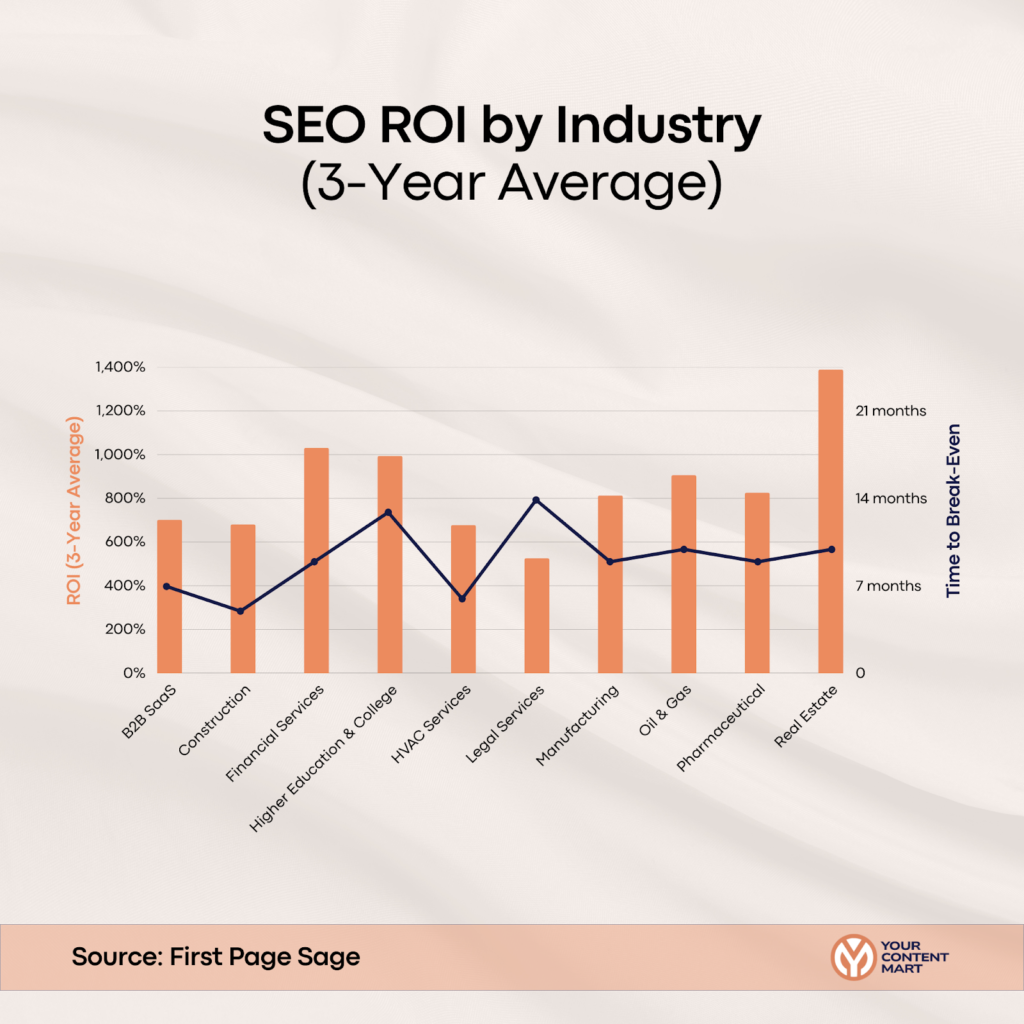
Over a three-year average, B2B SaaS companies generate a 702% return on investment from SEO, with break-even reached in approximately seven months. That puts organic search among the fastest-payback channels available, not just one of the most durable.
The mechanics behind this performance are straightforward. SEO captures high-intent demand from buyers actively researching solutions and continues to deliver organic traffic without additional spend. Once content ranks, it compounds. Paid channels, by contrast, reset to zero the moment budgets pause.
That compounding effect is reflected in revenue efficiency. SEO delivers a return on ad spend of 8.75, meaning that for every dollar invested, B2B SaaS companies generate $8.75 in revenue. Across B2B industries more broadly, the average SEO delivers even higher ROI; about 1,398% ROI for B2B real estate companies, reinforcing that this isn’t peculiar to SaaS, but a structural advantage of organic search.
Key Takeaways
Stop treating SEO as a long-term gamble. It’s important to model and work towards break-even timelines and forecast ROI just like paid media. Prioritize bottom-of-funnel and comparison keywords first to accelerate payback, then expand into authority-building content that compounds results.
5. Organic Search Outperforms Paid Search on Lead Quality
Cost efficiency alone doesn’t explain SEO’s advantage. Conversion efficiency matters just as much.
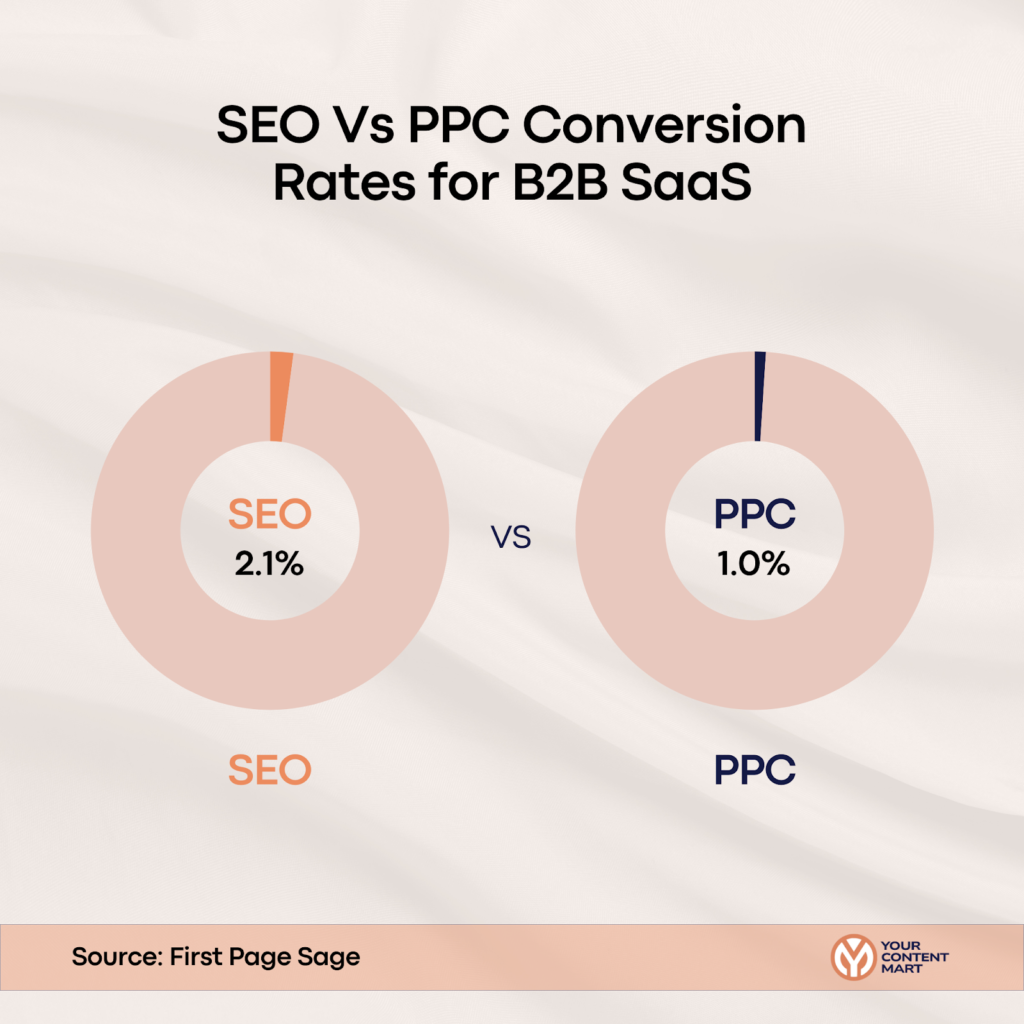
The average SEO conversion rate for B2B SaaS is 2.1%, more than double the average PPC conversion rate of 1.0%.
That difference reflects a deeper behavioral shift. Organic search tends to attract buyers who are actively investigating solutions, comparing vendors, and educating themselves. Paid search, by contrast, increasingly competes for attention in saturated environments where intent is less clear.
Over time, that gap compounds. Higher conversion rates mean lower effective CAC, better pipeline quality, and stronger downstream performance. It also reduces dependency on aggressive sales follow-up, since buyers arriving through organic channels tend to be further along in their decision-making process.
Key Takeaway
SEO’s edge isn’t just lower cost, but higher conversion efficiency. For B2B SaaS, it converts at more than double the rate of PPC, attracting higher-intent buyers who are further along in the decision process. Optimize for buyer intent, not just traffic volume. Create comparison pages, use-case pages, and solution-focused content that aligns with active research behavior. Measure effective CAC and pipeline quality, not just clicks, to see SEO’s full impact.
6. Having a Content Strategy isn’t Enough
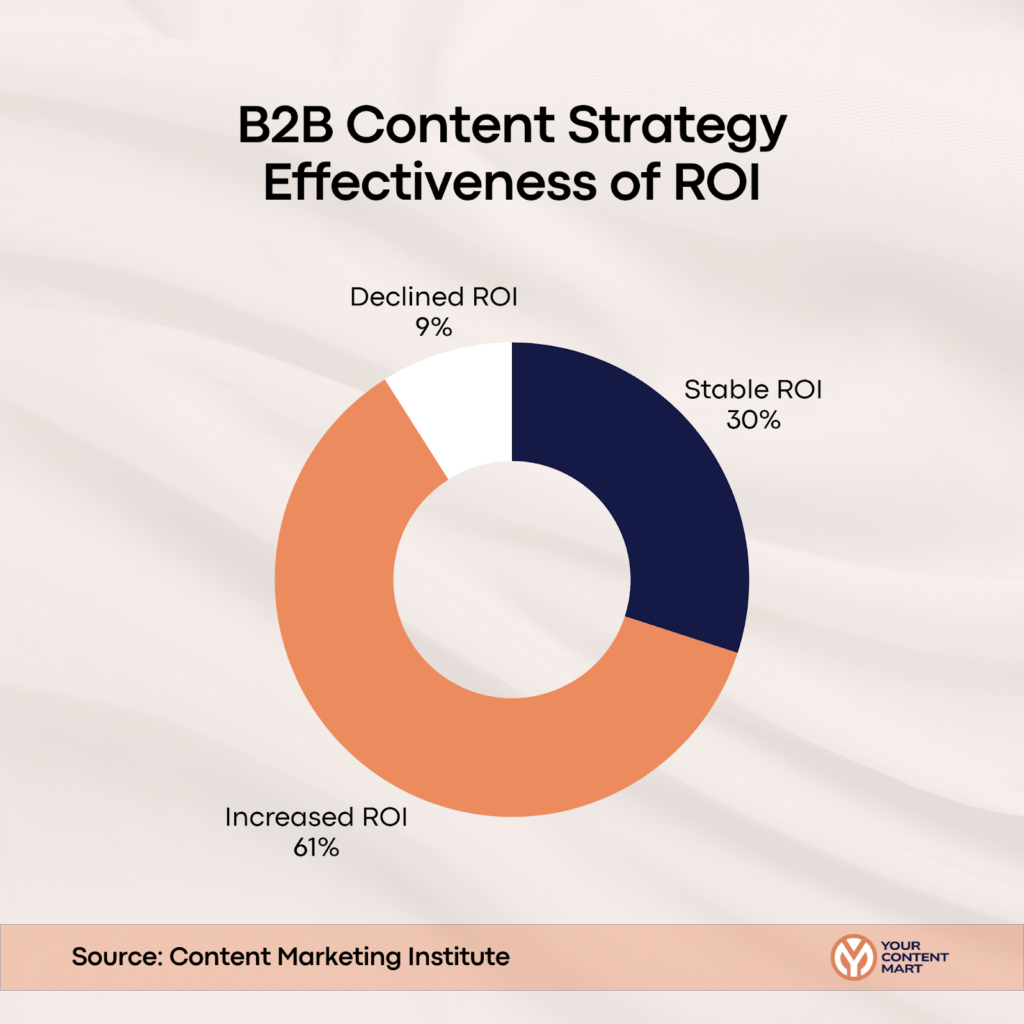
A few years ago, simply having a content strategy set companies apart. This year tells a different story. 97% of marketers now report having a content strategy in place; only 3% say they don’t.
But widespread adoption hasn’t translated into universal success.
Among marketers with a strategy, the outcomes are uneven. About 13% say their content efforts significantly improved, delivering clear gains in results and ROI. Another 48% report modest improvement, incremental progress rather than breakthroughs. For 30%, performance has remained largely stable. And for nearly 1 in 10, results have actually declined; with 8% seeing a noticeable drop and 1% reporting a significant decline.
In other words, content is everywhere, but impact is not.
The question is no longer whether a company produces content. It’s whether that content earns attention, trust, and engagement in an environment flooded with content that looks and sounds the same.
Key Takeaway
Nearly every company now has a content strategy, but having one no longer guarantees results. Audit performance quarterly and eliminate low-impact content. Invest more time into differentiation, proprietary insights, and sharper positioning so your content earns trust instead of blending into the noise.
7. How Much are Companies Actually Investing?
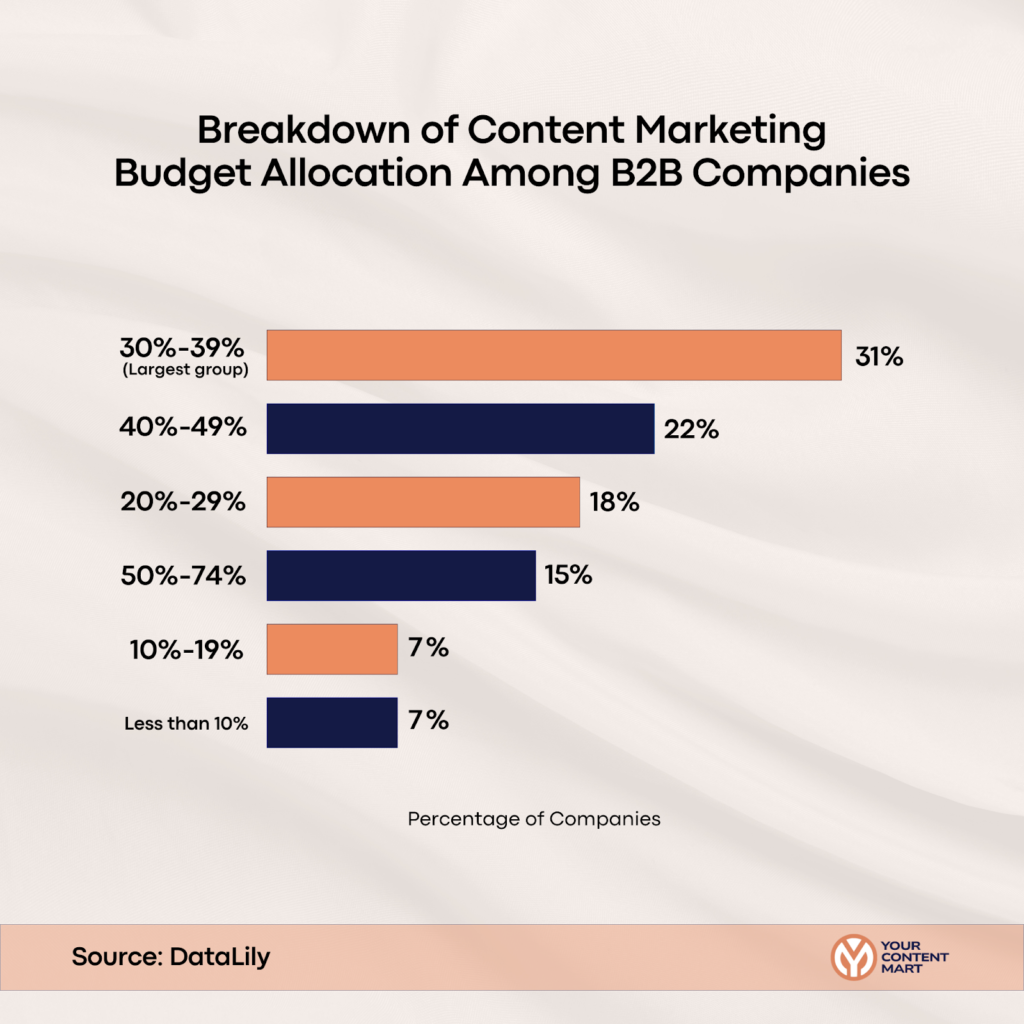
Content marketing now commands a significant share of B2B marketing budgets. 31% of companies allocate between 30% and 39% of their total marketing spend to content, making it the most common budget range.
A further 22% commit even more, dedicating 40% to 49% of their budget to content initiatives, while 15% invest aggressively, allocating as much as 50% to 74%. Mid-level investment remains strong as well, with 18% of companies spending 20% to 29% on content marketing.
In contrast, only a small minority underinvests, with just 7% allocating 10% to 19% and another 7% spending less than 10%. This underscores a clear industry shift toward content as a core growth driver rather than a supporting tactic.
Key Takeaway
If content already commands a large budget, demand performance discipline. Tie every major content initiative to a measurable outcome: traffic growth, pipeline contribution, or revenue influence. Content should justify its share of the pie through clear attribution.
8. Content Quality Over Quantity is the New Standard
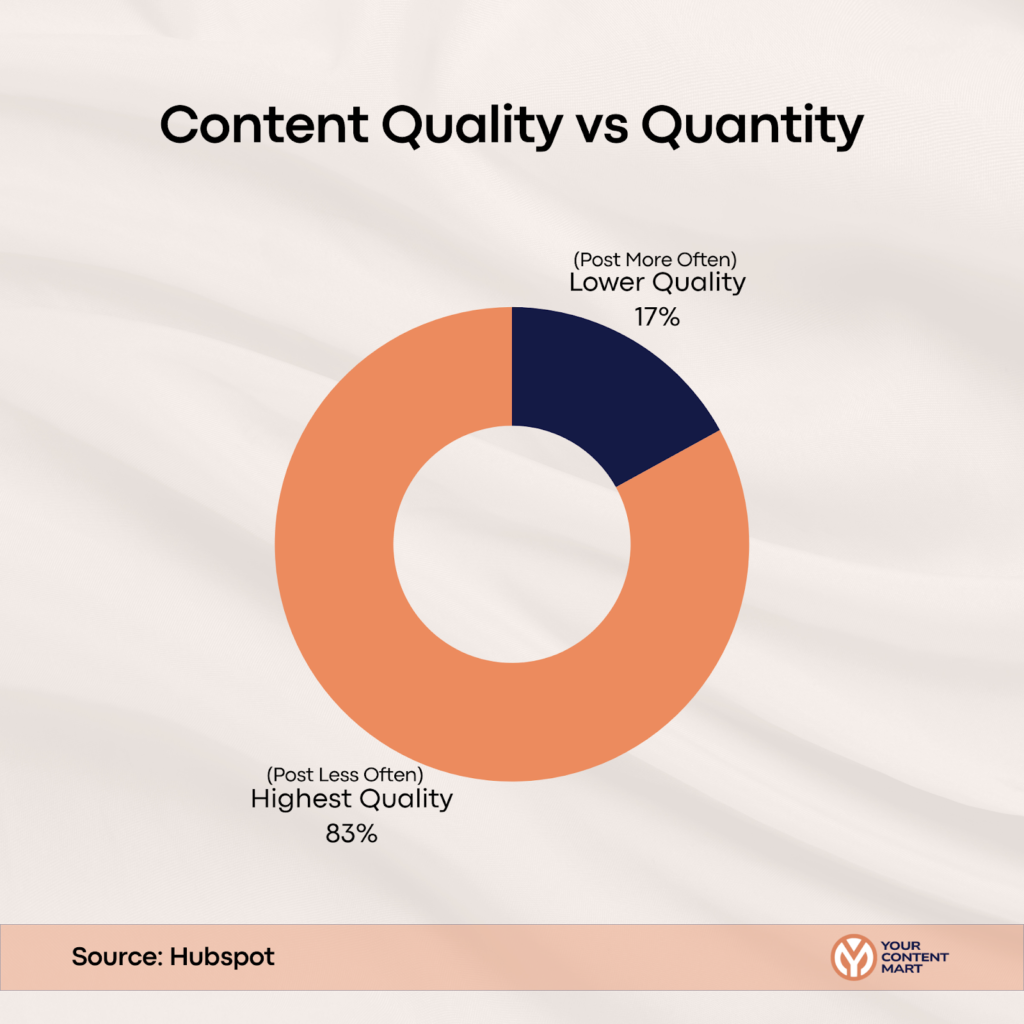
This is where expectations have shifted. 83% of marketers believe prioritizing quality over quantity is more effective, even if it means publishing less frequently. In an AI-saturated internet, volume is easy to replicate. Insight, relevance, and originality are not.
The result is a quiet recalibration. High-performing teams are publishing fewer assets, but investing far more into each one: deeper research, sharper positioning, stronger design, and tighter alignment with buyer intent. Content hasn’t lost its importance. It has simply stopped rewarding shortcuts.
Key Takeaways
The key shift in content marketing is from volume to value. Reduce publishing frequency if necessary, but increase depth and originality. Build research-backed, expert-driven pieces that cannot be easily replicated. Align every asset with a defined buyer stage and measurable goal.
Want to stand out in your SaaS content marketing game? Let’s talk!
9. AI is the Biggest Marketing Disruption in 20 Years
Let’s talk about AI, because it’s basically impossible to avoid the topic in 2026.
AI adoption in content marketing is widespread at this point. The scale of the shift is striking: 61% of marketers believe that marketing is experiencing its biggest disruption in 20 years due to AI, which has fundamentally changed how businesses engage with customers.
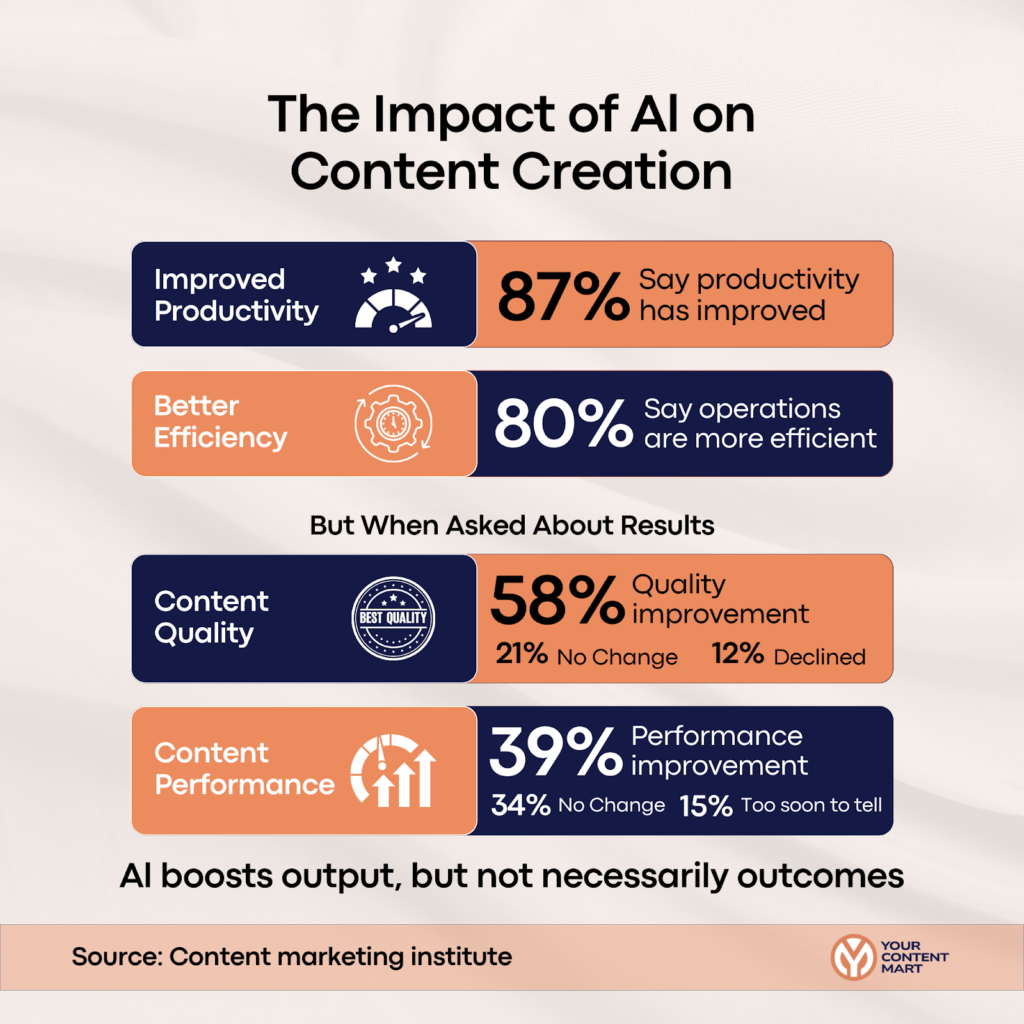
Among marketers using AI for content creation, 87% say they’re more productive and 80% report better operational efficiency. Those gains are real. Teams are shipping faster, automating research, and streamlining workflows that once consumed hours of manual effort.
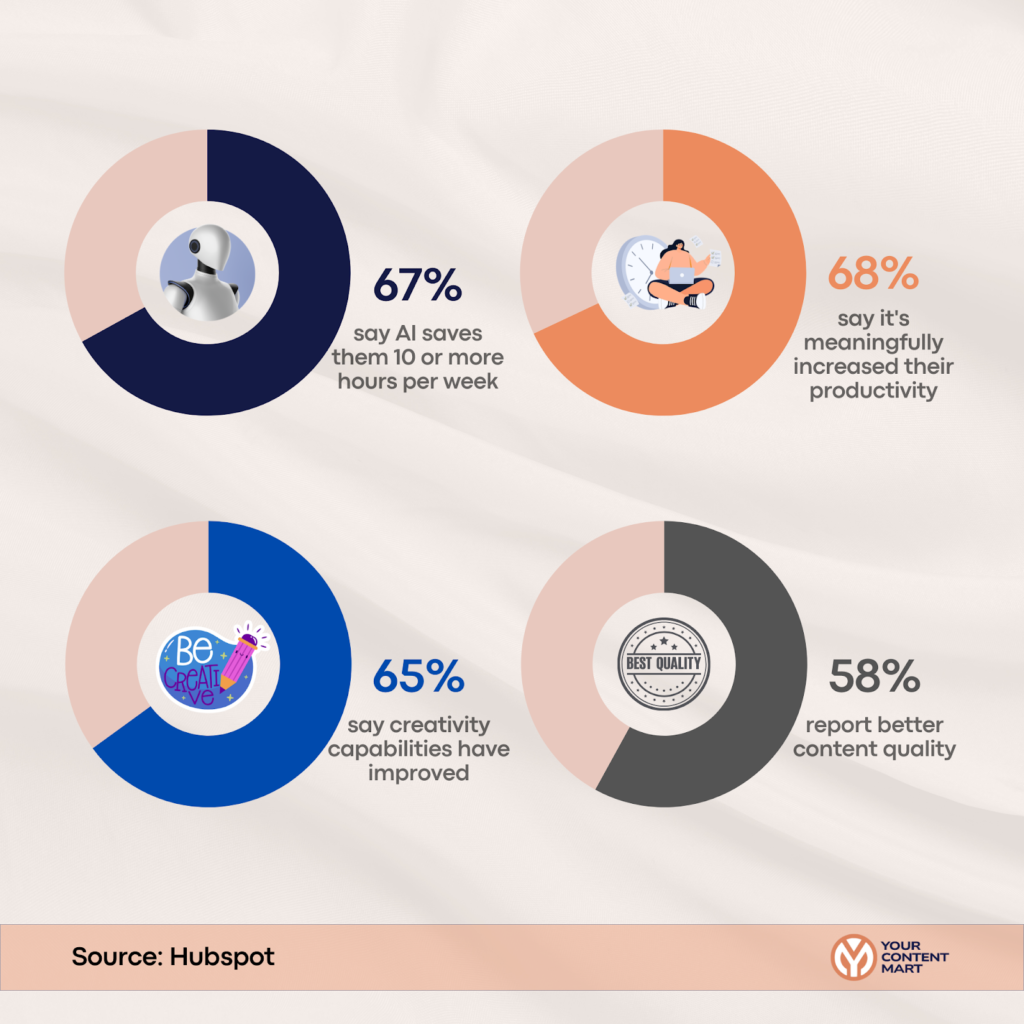
The time savings are quantifiable. 67% of marketing teams say AI saves them 10 or more hours per week, and 68% say it’s meaningfully increased their productivity, freeing up time for strategic thinking on how to connect with customers.
Some teams are seeing creative benefits too. About 65% say their creative capabilities have improved, and 58% report better content quality.
But here’s where it gets interesting…
Ask marketers what AI has changed, and the answers are mostly positive, at least on the surface.
Among those using AI for content creation, 87% report higher productivity and 80% say operational efficiency has improved. Even creative output appears to benefit, with 65% saying their creative capabilities are stronger than before.
But as you move closer to outcomes that actually matter, the optimism starts to fade.
Only 58% say content quality has improved; more than one in five report no change, and 12% say quality has declined. And when the question becomes performance (whether the content is actually driving better results), the numbers drop further. Just 39% say content performance has improved. A combined 49% report no improvement, uncertainty, or say it’s too early to tell.
The gap tells the whole story.
AI clearly makes teams faster and more efficient. It helps them produce more, move faster, and streamline execution. What it doesn’t automatically do is make content more effective.
Why? Because AI amplifies whatever foundation is already in place. Teams with clear positioning, strong distribution, and disciplined workflows use AI to scale what already works. Teams without those fundamentals simply scale output or even mediocrity more efficiently.
AI is an execution multiplier, not a strategy. It doesn’t create advantage, it exposes it. And until the strategy is sound, speed alone won’t change outcomes.
Key Takeaway
AI has dramatically improved productivity and efficiency in content marketing, but speed hasn’t translated into consistent performance gains. Use AI to accelerate workflows, not replace strategy. Establish clear positioning, distribution plans, and performance benchmarks first. Then deploy AI to scale research, repurposing, and optimization without sacrificing authenticity.
10. Execution Has Become the Real Bottleneck
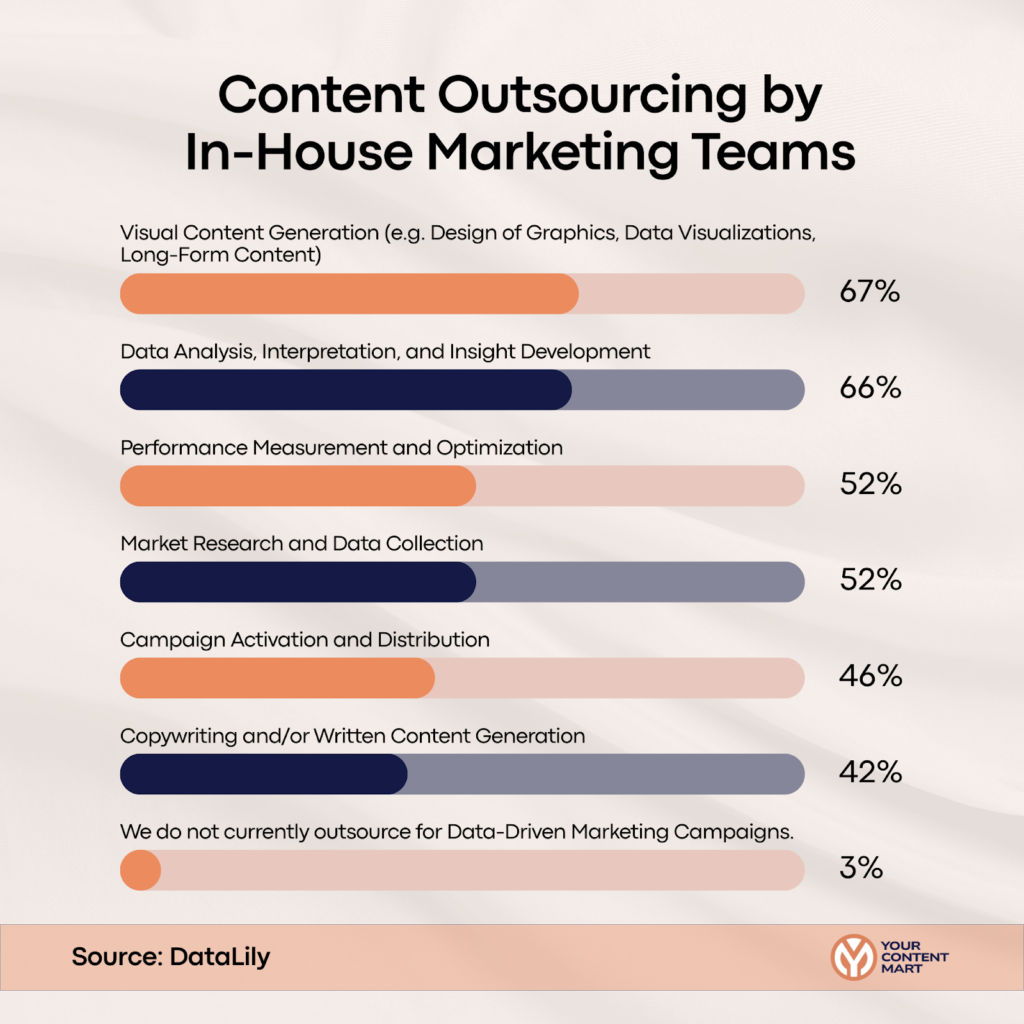
Two-thirds (67%) of B2B SaaS marketers report that content production and data analysis are holding in-house teams back. The response has been decisive: 97% of B2B SaaS companies now outsource at least one component of data-driven content marketing.
This leads to an uncomfortable truth about content marketing in 2026: most teams know what to do but simply lack the capacity to execute at the level required.
The pattern is clear. Companies have ambitious content strategies. They understand the importance of SEO, quality, and buyer intent. But they lack the internal capacity to execute consistently, particularly in research-backed content, technical SEO, and ongoing optimization.
Key Takeaways
If internal capacity is limiting results, systematize or outsource strategically. Document workflows, define quality standards, and bring in specialized support for technical SEO, research, or analytics to prevent execution from stalling strategy.
11. AI Software Leads the Expanding SaaS Market
The global SaaS market is projected to reach nearly $819 billion by 2029. At the same time, AI software alone now serves close to 3 billion users worldwide, making it the largest SaaS category by user base.
That’s not incremental growth but a structural expansion.
However, most founders underestimate that this growth is happening during a period of fundamental disruption.
Search behavior is changing, AI is reshaping discovery, and buyers are more easily self-educated than ever. The market is expanding, but so is the competition.
In the current market environment, distribution isn’t optional, and visibility isn’t accidental. Now is the time to drive high-intent conversions before your competitors do.
The SaaS market is growing fast. So the question isn’t whether there’s demand, it’s whether your company is positioned to capture it.
Key Takeaway
The SaaS market is expanding rapidly, but so is competition amid major shifts in search and AI-driven discovery. Market growth doesn’t guarantee growth for you. Invest in distribution, brand search demand, and high-intent capture now. Build defensible visibility before competition intensifies further.
12. Marketing Budgets Are Growing, And Accountability is Rising
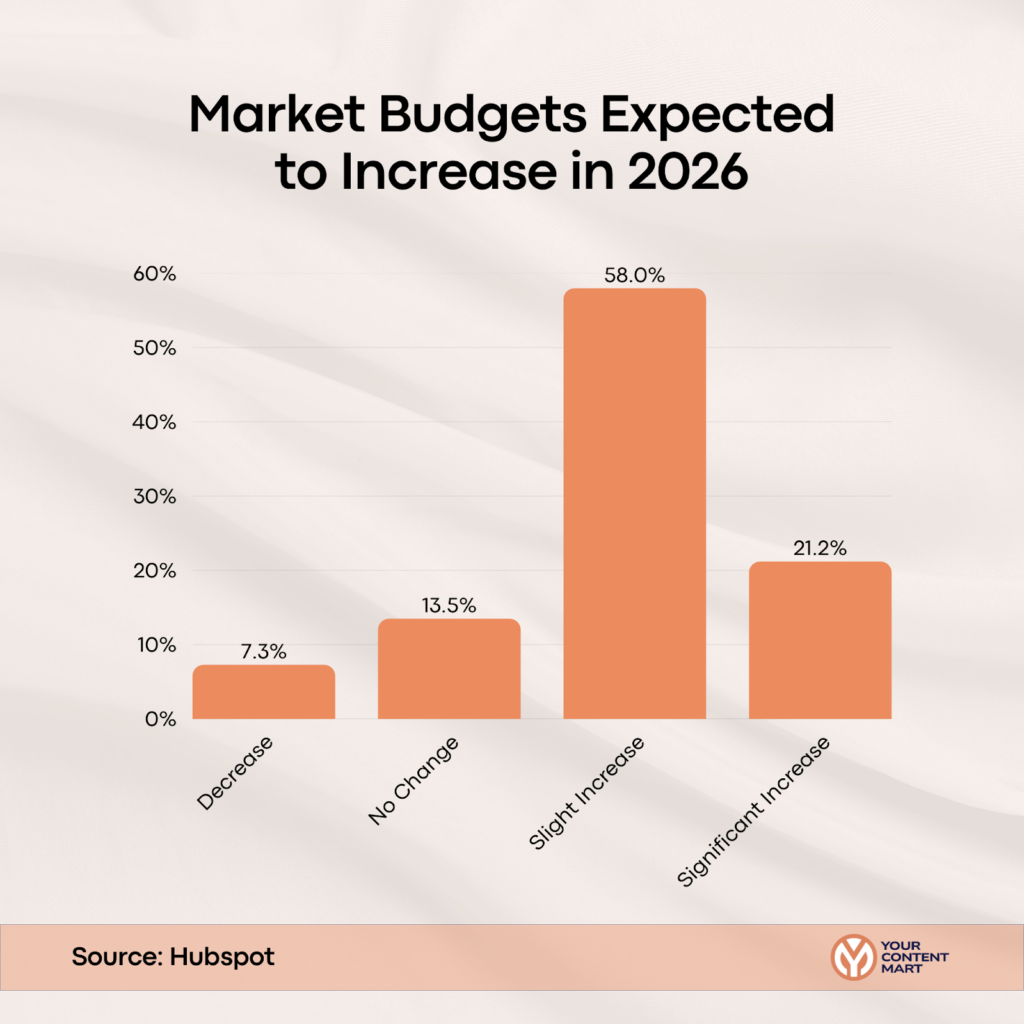
Despite economic uncertainty, marketing budgets are trending upward. 79.2% of marketing teams expect at least a slight budget increase in 2026, with 21.2% anticipating a significant increase.
But this growth comes with scrutiny. Leaders are demanding clearer connections between spend and outcomes, particularly in content and brand-led initiatives that were once harder to measure.
This shift is reflected in budget allocation. When asked where they plan to increase investment, 45% of B2B marketers cited AI-powered marketing tools, 33% cited events and experiential marketing, and 32% cited owned media such as content, websites, blogs, and email.
Key Takeaway
While most teams expect more funding, leaders are demanding clearer ROI, especially from content and brand efforts. Prepare for higher accountability. Connect content and AI investments directly to pipeline metrics and revenue contribution. Build dashboards that show efficiency, not just activity, to protect and expand budgets.
13. Video Continues to Deliver Reliable Returns
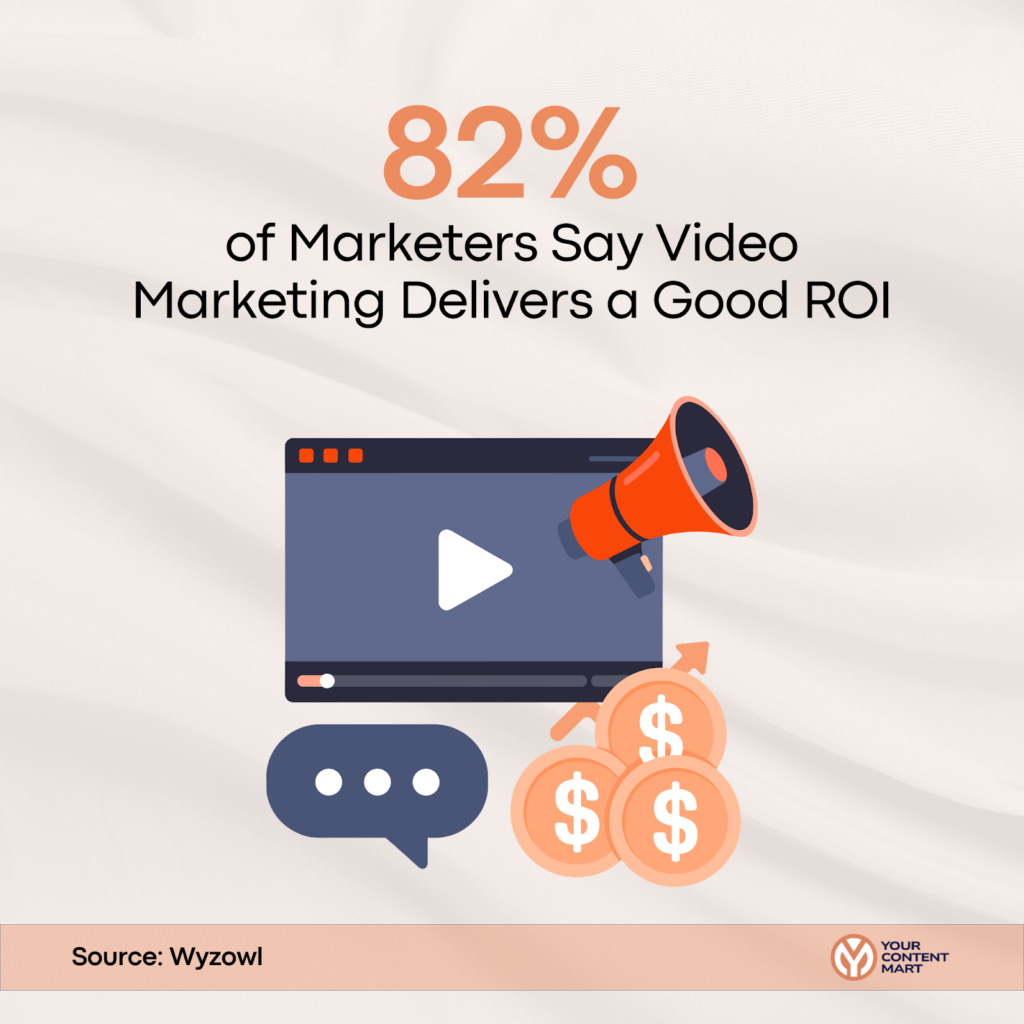
Amid changing benchmarks, video remains one of the most resilient formats in the content mix. 82% of marketers say video marketing delivers a good ROI. This places video among the most consistently effective content formats available.
Key Takeaways
Amid shifting marketing benchmarks, video remains a high-performing tool. Integrate video into core funnel stages, not as an add-on. Use product explainers, educational series, and thought leadership to drive engagement and conversions. Repurpose video across owned channels to maximize reach and ROI.
Where to Invest Your Next Marketing Dollar in 2026
You’ve seen the numbers. SEO delivers $205 organic CAC compared to $341 for paid ads, generates up to 702% ROI, and converts at 2.1% compared to PPC’s 1.0%. With the growing rate of AI implementation, 97% of teams now have a content strategy, but only 39% report improved performance. AI is accelerating execution, and yet, it’s also reducing the margin for error.
The shift is happening whether you’re ready or not.
The question isn’t whether to invest in SEO, content authority, or AI-assisted execution. It’s whether you’re doing it in a way that’s profitable to your company.
We’ve helped SaaS companies like CopySmith turn organic search into their primary growth engine by building defensible topical authority, capturing high-intent demand, and closing execution gaps that stall in-house teams. The difference isn’t more content. It’s precision in what gets built, why it gets built, and how it’s distributed.
We understand how modern search works, including AI Overviews, citation behavior, and buyer-intent clustering. More importantly, we know how to translate that into revenue, not just rankings.
If you’re serious about turning organic search into a structural advantage, let’s talk.
Book a strategy call with our team. No pitch deck. Just a focused conversation about where you are, what’s working, and what needs to change.


Jelilat Olabisi is the content manager at Your Content Mart. She creates content that drives leads for SaaS brands through SEO, AEO, and strategic storytelling.